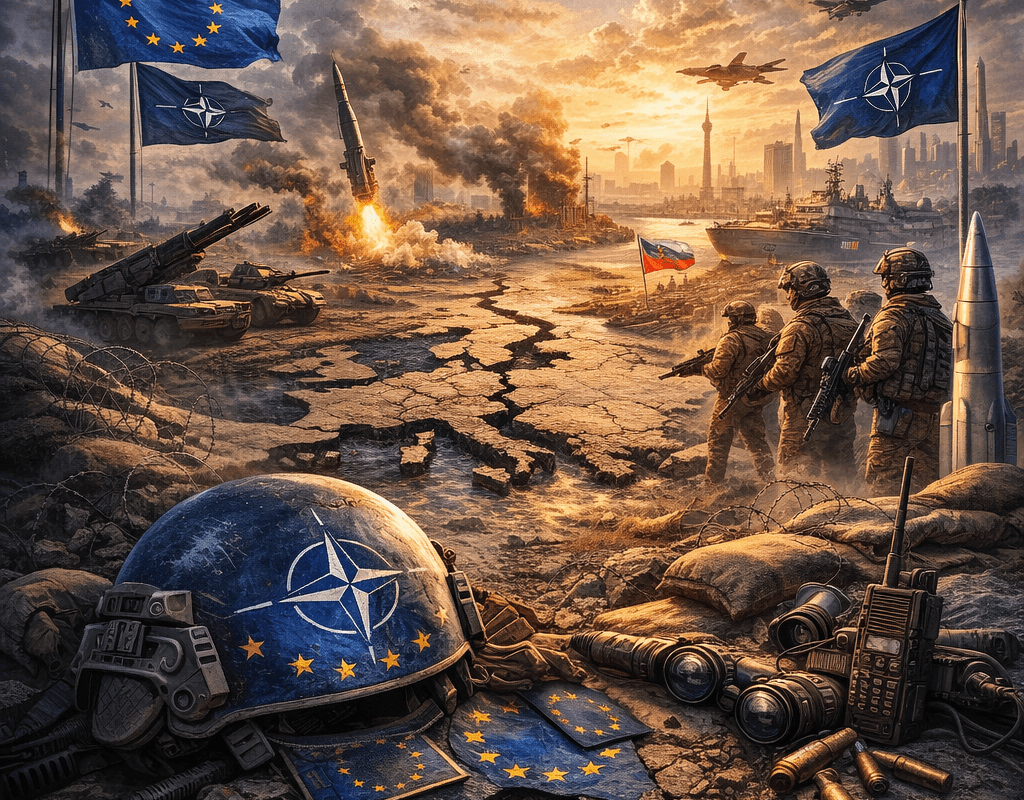
Rusya’nın Ukrayna’yı işgali, Avrupa için yalnızca bir güvenlik krizi değil; aynı zamanda onlarca yıldır ertelenen savunma ve jeopolitik sorumlulukların sert bir hatırlatıcısı oldu. Soğuk Savaş sonrası dönemde Avrupa Birliği, güvenliğini büyük ölçüde ABD liderliğindeki NATO’ya devretti ve savunmayı stratejik bir öncelik olmaktan çıkardı. Sonuçta ortaya çıkan tablo, askeri kapasite eksikliği, parçalı savunma sanayisi ve krizlere karşı sınırlı stratejik özerklik oldu.
Bu politika notunun temel tezi şudur: Avrupa’nın karşı karşıya olduğu tehdit ortamı köklü biçimde değişti. Caydırıcılık, savunma sanayisi ve stratejik özerklik artık teorik tartışmalar değil; Avrupa’nın siyasi ağırlığını, ekonomik dayanıklılığını ve küresel rolünü belirleyen somut unsurlardır. Avrupa, güvenlik alanında “norm koyan” bir aktörden, gerektiğinde güç kullanabilen ve bunu sürdürülebilir biçimde destekleyebilen bir aktöre evrilmek zorundadır.
Sorun Nedir?
- ABD’ye aşırı güvenlik bağımlılığı: Avrupa savunmasının omurgası hâlâ transatlantik desteğe dayanıyor.
- Parçalı savunma mimarisi: Ulusal ordular, standartlar ve tedarik sistemleri arasında ciddi uyumsuzluk var.
- Yetersiz savunma harcamaları: Uzun yıllar boyunca savunma bütçeleri siyasi olarak ihmal edildi.
- Zayıf savunma sanayii entegrasyonu: Ölçek ekonomileri ve ortak Ar-Ge yeterince kullanılamıyor.
- Yeni tehdit alanları: Siber güvenlik, uzay, hibrit savaş ve dezenformasyon klasik savunma anlayışını aşıyor.
Dünün Hataları: Güvenliği “İthal” Etmenin Bedeli
Soğuk Savaş’ın sona ermesiyle birlikte Avrupa’da yaygın bir varsayım hâkim oldu: büyük çaplı savaşlar artık kıtada mümkün değildi. Bu iyimserlik, savunma harcamalarının düşürülmesini ve askeri kapasitenin geri plana itilmesini beraberinde getirdi. Güvenlik, fiilen ABD’nin sağladığı bir kamu malı olarak görüldü.
Bu yaklaşım kısa vadede siyasi ve mali açıdan cazipti. Ancak uzun vadede Avrupa’yı stratejik açıdan pasif bir aktöre dönüştürdü. Savunma sanayileri ulusal sınırlar içinde bölündü, ortak projeler yavaş ilerledi ve kritik askeri kabiliyetlerde dışa bağımlılık arttı.
Aynı dönemde AB, güvenliği daha çok “normlar ve değerler” üzerinden tanımladı. Diplomasi, ticaret ve düzenleme gücü ön plana çıkarken, sert güç unsurları ihmal edildi. Ukrayna savaşı, bu dengenin sürdürülemez olduğunu açık biçimde gösterdi.
Bugünkü Güvenlik Krizi: Stratejik Özerklik Açığı
2022 sonrası Avrupa, savunma alanında hızla harekete geçti. Savunma bütçeleri artırıldı, ortak mühimmat tedariki gündeme geldi ve savunma sanayisi yeniden stratejik sektör olarak tanımlandı. Ancak tablo hâlâ kırılgan.
Birçok Avrupa ülkesi mühimmat, hava savunması, istihbarat ve stratejik lojistik alanlarında yetersiz kapasiteye sahip. ABD desteği olmadan uzun süreli yüksek yoğunluklu bir çatışmayı sürdürme kabiliyeti sınırlı. Bu durum, Avrupa’nın caydırıcılığını zayıflatıyor.
Öte yandan güvenlik tehditleri yalnızca askeri değil. Siber saldırılar, kritik altyapılara yönelik sabotajlar, enerji ve gıda güvenliği, dezenformasyon kampanyaları Avrupa’nın açıklarını test ediyor. Mevcut kurumsal yapı, bu çok boyutlu tehditlere karşı yeterince hızlı ve bütüncül tepki veremiyor.
Gelecek Stratejileri: Avrupa Güvenliğini Yeniden İnşa Etmek
1. Savunmayı Kalıcı Bir Stratejik Öncelik Haline Getir
Savunma harcamaları kriz anlarında artıp sonra unutulan kalemler olmamalı. Uzun vadeli, öngörülebilir ve ortak hedeflere bağlı savunma planlaması şart.
2. Avrupa Savunma Sanayisini Entegre Et
Parçalı ulusal projeler yerine ortak platformlar, standartlar ve büyük ölçekli tedarik programları geliştirilmelidir. Bu hem maliyetleri düşürür hem de operasyonel uyumu artırır.
3. NATO ile Uyumlu, Ama Daha Özerk Bir Avrupa
Stratejik özerklik, NATO’dan kopmak anlamına gelmez. Ama Avrupa’nın ABD desteği olmadan da hareket edebilecek asgari kapasiteyi oluşturması gerekir.
4. Yeni Tehdit Alanlarına Odaklan
Siber güvenlik, uzay, yapay zekâ ve hibrit tehditler savunma stratejisinin merkezine alınmalıdır. Sivil-asker işbirliği bu alanlarda kritik önemdedir.
5. Toplumsal ve Siyasal Meşruiyeti Güçlendir
Savunma politikaları yalnızca askeri elitlerin konusu olmamalı. Kamuoyu desteği, şeffaflık ve demokratik denetim Avrupa’nın güvenlik mimarisinin temelidir.
Sonuç
Avrupa için güvenlik artık “başkalarının sağladığı” bir konfor alanı değildir. Değişen jeopolitik ortam, Avrupa’yı daha sorumlu, daha hazırlıklı ve daha özerk olmaya zorluyor. Savunma, sanayi, teknoloji ve siyasal irade birlikte ele alınırsa, Avrupa stratejik özerkliğini güçlendirebilir. Aksi takdirde, Avrupa küresel krizlerin sahnesi olmaya devam eder; aktörü olamaz.
DEFENSE, SECURITY, AND STRATEGIC AUTONOMY IN EUROPE
Russia’s invasion of Ukraine has been not only a security crisis for Europe, but also a stark reminder of defense and geopolitical responsibilities that have been postponed for decades. In the post-Cold War era, the European Union largely delegated its security to NATO, led by the US, and removed defense from the list of strategic priorities. The result has been a lack of military capacity, a fragmented defense industry, and limited strategic autonomy in the face of crises.
The main thesis of this policy note is that the threat landscape facing Europe has fundamentally changed. Deterrence, the defense industry, and strategic autonomy are no longer theoretical discussions; they are concrete elements that determine Europe’s political weight, economic resilience, and global role. Europe must evolve from a “norm-setting” actor in the security field to an actor that can use force when necessary and sustainably support it.
What is the Problem?
• Excessive security dependence on the US: The backbone of European defense still relies on transatlantic support.
• Fragmented defense architecture: There are serious inconsistencies between national armies, standards, and procurement systems. • Insufficient defense spending: Defense budgets have been politically neglected for many years. • Weak defense industry integration: Economies of scale and joint R&D are not being utilized sufficiently. • New threat areas: Cybersecurity, space, hybrid warfare, and disinformation are exceeding the classical understanding of defense.
Yesterday’s Mistakes: The Price of “Importing” Security
With the end of the Cold War, a widespread assumption prevailed in Europe: large-scale wars were no longer possible on the continent. This optimism led to a reduction in defense spending and the marginalization of military capacity. Security was effectively seen as a public good provided by the US.
This approach was attractive politically and financially in the short term. However, in the long term, it transformed Europe into a strategically passive actor. Defense industries were fragmented within national borders, joint projects progressed slowly, and external dependence on critical military capabilities increased.
During the same period, the EU defined security more through “norms and values.” While diplomacy, trade, and regulatory power came to the forefront, hard power elements were neglected. The Ukraine war clearly demonstrated that this balance is unsustainable.
The Current Security Crisis: The Strategic Autonomy Deficit
After 2022, Europe moved rapidly in the field of defense. Defense budgets were increased, joint ammunition procurement came to the agenda, and the defense industry was redefined as a strategic sector. However, the situation is still fragile.
Many European countries have insufficient capacity in the areas of ammunition, air defense, intelligence, and strategic logistics. Their ability to sustain a long-term, high-intensity conflict without US support is limited. This weakens Europe’s deterrence.
On the other hand, security threats are not only military. Cyberattacks, sabotage of critical infrastructure, energy and food security, and disinformation campaigns are testing Europe’s vulnerabilities. The current institutional structure cannot respond quickly and holistically enough to these multi-dimensional threats.
Future Strategies: Rebuilding European Security
1. Make Defence a Permanent Strategic Priority
Defense spending should not be an item that increases during times of crisis and then is forgotten. Long-term, predictable, and goal-oriented defence planning is essential.
2. Integrate the European Defence Industry
Instead of fragmented national projects, common platforms, standards, and large-scale procurement programs should be developed. This both reduces costs and increases operational coherence.
3. A More Autonomous Europe, Compatible with NATO
Strategic autonomy does not mean breaking away from NATO. But Europe needs to build the minimum capacity to act without US support.
4. Focus on New Threat Areas
Cybersecurity, space, artificial intelligence, and hybrid threats should be at the center of defence strategy. Civil-military cooperation is critical in these areas.
5. Strengthen Social and Political Legitimacy
Defense policies should not be solely the concern of military elites. Public support, transparency, and democratic oversight are fundamental to Europe’s security architecture.
Conclusion
For Europe, security is no longer a comfort zone “provided by others.” The changing geopolitical environment is forcing Europe to be more responsible, better prepared, and more autonomous. If defense, industry, technology, and political will are considered together, Europe can strengthen its strategic autonomy. Otherwise, Europe will continue to be the stage for global crises; it will not be an actor in them.
VERTEIDIGUNG, SICHERHEIT UND STRATEGISCHE AUTONOMIE IN EUROPA
Russlands Invasion in der Ukraine war nicht nur eine Sicherheitskrise für Europa, sondern auch eine deutliche Mahnung an die jahrzehntelang vernachlässigten Verteidigungs- und geopolitischen Verantwortlichkeiten. Nach dem Kalten Krieg delegierte die Europäische Union ihre Sicherheitsverantwortung weitgehend an die von den USA geführte NATO und strich die Verteidigung von ihrer Liste strategischer Prioritäten. Die Folge waren mangelnde militärische Kapazitäten, eine fragmentierte Rüstungsindustrie und begrenzte strategische Autonomie in Krisenzeiten.
Die Hauptthese dieses Strategiepapiers lautet, dass sich die Bedrohungslandschaft für Europa grundlegend verändert hat. Abschreckung, Rüstungsindustrie und strategische Autonomie sind keine theoretischen Diskussionspunkte mehr, sondern konkrete Elemente, die Europas politisches Gewicht, seine wirtschaftliche Widerstandsfähigkeit und seine globale Rolle bestimmen. Europa muss sich von einem Akteur, der im Sicherheitsbereich Normen setzt, zu einem Akteur entwickeln, der im Bedarfsfall Gewalt anwenden und diese nachhaltig aufrechterhalten kann.
Was ist das Problem?
• Übermäßige Sicherheitsabhängigkeit von den USA: Das Rückgrat der europäischen Verteidigung stützt sich weiterhin auf transatlantische Unterstützung.
• Fragmentierte Verteidigungsarchitektur: Es bestehen gravierende Inkonsistenzen zwischen den nationalen Armeen, Standards und Beschaffungssystemen. • Unzureichende Verteidigungsausgaben: Verteidigungshaushalte wurden jahrelang politisch vernachlässigt. • Schwache Integration der Verteidigungsindustrie: Skaleneffekte und gemeinsame Forschung und Entwicklung werden nicht ausreichend genutzt. • Neue Bedrohungsfelder: Cybersicherheit, Weltraum, hybride Kriegsführung und Desinformation gehen über das klassische Verständnis von Verteidigung hinaus.
Fehler von gestern: Der Preis für importierte Sicherheit
Mit dem Ende des Kalten Krieges herrschte in Europa die weitverbreitete Annahme vor, dass groß angelegte Kriege auf dem Kontinent nicht mehr möglich seien. Dieser Optimismus führte zu einer Reduzierung der Verteidigungsausgaben und zur Marginalisierung militärischer Kapazitäten. Sicherheit wurde faktisch als öffentliches Gut betrachtet, das von den USA bereitgestellt wird.
Dieser Ansatz war kurzfristig politisch und finanziell attraktiv. Langfristig jedoch verwandelte er Europa in einen strategisch passiven Akteur. Die Verteidigungsindustrien waren innerhalb nationaler Grenzen fragmentiert, gemeinsame Projekte kamen nur langsam voran, und die Abhängigkeit von kritischen militärischen Fähigkeiten durch externe Akteure nahm zu.
Im selben Zeitraum definierte die EU Sicherheit stärker über „Normen und Werte“. Während Diplomatie, Handel und Regulierungsmacht in den Vordergrund rückten, wurden militärische Elemente vernachlässigt. Der Ukraine-Krieg zeigte deutlich, dass dieses Gleichgewicht nicht tragbar ist.
Die aktuelle Sicherheitskrise: Das Defizit an strategischer Autonomie
Nach 2022 bewegte sich Europa im Verteidigungsbereich rasant. Die Verteidigungshaushalte wurden erhöht, die gemeinsame Munitionsbeschaffung auf die Tagesordnung gesetzt und die Verteidigungsindustrie als strategischer Sektor neu definiert. Die Lage ist jedoch weiterhin fragil.
Viele europäische Länder verfügen über unzureichende Kapazitäten in den Bereichen Munition, Luftverteidigung, Aufklärung und strategische Logistik. Ihre Fähigkeit, einen langfristigen, hochintensiven Konflikt ohne US-Unterstützung aufrechtzuerhalten, ist begrenzt. Dies schwächt Europas Abschreckungsfähigkeit.
Andererseits sind Sicherheitsbedrohungen nicht nur militärischer Natur. Cyberangriffe, Sabotage kritischer Infrastrukturen, Gefährdung der Energie- und Lebensmittelsicherheit sowie Desinformationskampagnen stellen Europas Verwundbarkeit auf die Probe. Die gegenwärtige institutionelle Struktur kann diesen vielschichtigen Bedrohungen nicht schnell und umfassend genug begegnen.
Zukunftsstrategien: Wiederaufbau der europäischen Sicherheit
1. Verteidigung als dauerhafte strategische Priorität
Verteidigungsausgaben dürfen nicht nur in Krisenzeiten erhöht und dann vergessen werden. Eine langfristige, planbare und zielorientierte Verteidigungsstrategie ist unerlässlich.
2. Integration der europäischen Verteidigungsindustrie
Anstelle fragmentierter nationaler Projekte sollten gemeinsame Plattformen, Standards und groß angelegte Beschaffungsprogramme entwickelt werden. Dies senkt die Kosten und erhöht die operative Kohärenz.
3. Ein autonomeres Europa, kompatibel mit der NATO
Strategische Autonomie bedeutet nicht den Austritt aus der NATO. Europa muss jedoch die Mindestkapazität aufbauen, um ohne US-Unterstützung handeln zu können.
4. Fokus auf neue Bedrohungsbereiche
Cybersicherheit, Weltraum, künstliche Intelligenz und hybride Bedrohungen sollten im Zentrum der Verteidigungsstrategie stehen. Die zivil-militärische Zusammenarbeit ist in diesen Bereichen entscheidend. 5. Stärkung der gesellschaftlichen und politischen Legitimität
Verteidigungspolitik sollte nicht allein Sache der militärischen Eliten sein. Öffentliche Unterstützung, Transparenz und demokratische Kontrolle sind grundlegend für Europas Sicherheitsarchitektur.
Fazit: Für Europa ist Sicherheit keine Komfortzone mehr, die „von anderen bereitgestellt“ wird. Das sich wandelnde geopolitische Umfeld zwingt Europa zu mehr Verantwortung, besserer Vorbereitung und größerer Autonomie. Werden Verteidigung, Industrie, Technologie und politischer Wille gemeinsam betrachtet, kann Europa seine strategische Autonomie stärken. Andernfalls bleibt Europa Schauplatz globaler Krisen, ohne selbst aktiv daran mitzuwirken.
 okandinc