Okan Dinç
Mechanical Engineer | Automotive Manufacturing Executive
Abstract
The automotive industry is going through a major shift, and it’s happening fast. One of the biggest changes? Product development cycles are shrinking significantly, pushing companies to rethink how they design and deliver vehicles.
Traditionally, Japanese automakers have taken a careful, validation-heavy approach, with development timelines stretching anywhere from 36 to 60 months. This method prioritizes precision and reliability, but it can slow things down in a rapidly evolving market.
On the other hand, many Chinese manufacturers are taking a different route. They’ve embraced more agile, iterative development models, cutting timelines down to around 24 months. It’s a faster, more flexible approach—but it comes with its own set of trade-offs.
So how do these two strategies really compare? This paper dives into that question, offering a side-by-side analysis of both approaches. It also introduces something called the Dual-Transition Transformation Model, which blends structural and functional changes into a unified framework.
To make things more concrete, the study proposes a mathematical model that helps measure the balance between speed, quality, risk, and cost. In other words, it gives you a clearer way to see what’s gained—and what might be compromised—when development speeds up.
Here’s the key takeaway: hybrid models that combine elements from both approaches tend to perform better, especially in fast-changing markets. They strike a balance that purely traditional or purely agile systems struggle to achieve.
Overall, these findings offer valuable insights for both researchers and industry professionals, particularly as the automotive world moves deeper into the era of software-defined vehicles.
Keywords
Automotive engineering, agile development, product lifecycle, China speed, dual-transition model, systems engineering
I. INTRODUCTION
The automotive industry is in the middle of a major shift, driven by electrification, connectivity, and the rise of software-defined vehicle architectures. These changes aren’t just technical—they’re reshaping how cars are designed, built, and delivered.
For years, traditional development cycles have stretched between 36 and 60 months. But now, faster-moving competitors are cutting that timeline down to as little as 24 months, putting serious pressure on established players to keep up.
This shift brings a tough engineering trade-off. Speeding up development helps companies get to market faster—but it also raises the risk of system-level issues. Move too quickly, and you might miss critical problems; move too slowly, and you risk falling behind.
II. LITERATURE REVIEW
A. Lean Product Development
Lean product development focuses on making decisions based on solid knowledge and exploring multiple design options at once through set-based concurrent engineering. It’s a thoughtful, methodical approach that builds strong, reliable outcomes—but it often takes more time to get there.
B. Agile Development
Agile methods are all about speed and flexibility. Teams can iterate quickly, adapt to changes, and keep momentum high. The catch? When you apply this to complex physical systems like vehicles, rapid changes can create integration challenges that are harder to manage.
C. Systems Engineering
The V-model is a classic in systems engineering, known for its structured approach and strong emphasis on validation. It helps ensure everything works as intended, but it’s not always flexible enough to keep up with fast-changing requirements or environments.
D. Software-Defined Vehicles
With over-the-air (OTA) updates, vehicles are no longer static products—they’re continuously evolving systems. This shift means cars can improve and adapt after they’ve already been delivered, changing the way we think about development and lifecycle management.
E. Speed–Quality Trade-off
Here’s the core tension: the faster you innovate, the more uncertainty you introduce. Pushing speed can increase the likelihood of defects, making it critical to find the right balance between moving fast and maintaining quality.
III. INDUSTRY TRANSFORMATION: CHINA VS JAPAN
Chinese manufacturers adopt:
- Iterative development
- OTA-based updates
- Market-driven learning
Japanese manufacturers emphasize:
- Multi-stage validation
- Durability
- Risk minimization
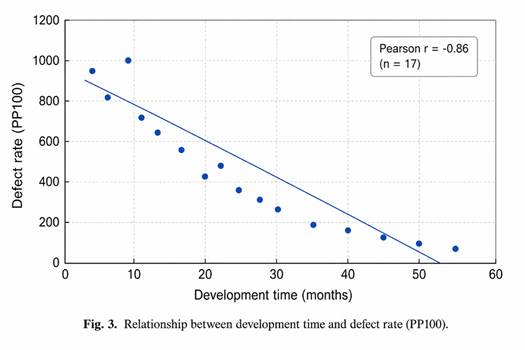
Empirical findings indicate increased quality issues under accelerated development conditions.
IV. DUAL-TRANSITION TRANSFORMATION MODEL
A. Model Positioning
| Model | Limitation | Dual-Transition Contribution |
| Lean | Slow | Adds speed layer |
| Agile | Risky | Adds control layer |
| Systems Engineering | Rigid | Adds adaptability |
B. Conceptual Structure
The model consists of two simultaneous transitions:
- Structural Transition (organizational agility)
- Functional Transition (engineering methodology evolution)
C. Mathematical Formulation

Where:
: Overall performance
: Development speed
: Quality index
: Risk level
: Cost impact
: weighting coefficients
D. Optimization Problem

Subject to:


E. Model Interpretation
| Model | Speed | Quality | Risk | Outcome |
| China | High | Medium | High | Fast but unstable |
| Japan | Low | High | Low | Stable but slow |
| Dual-Transition | Optimized | High | Controlled | Balanced |
V. RESULTS AND ANALYSIS
A. Trade-off Behavior
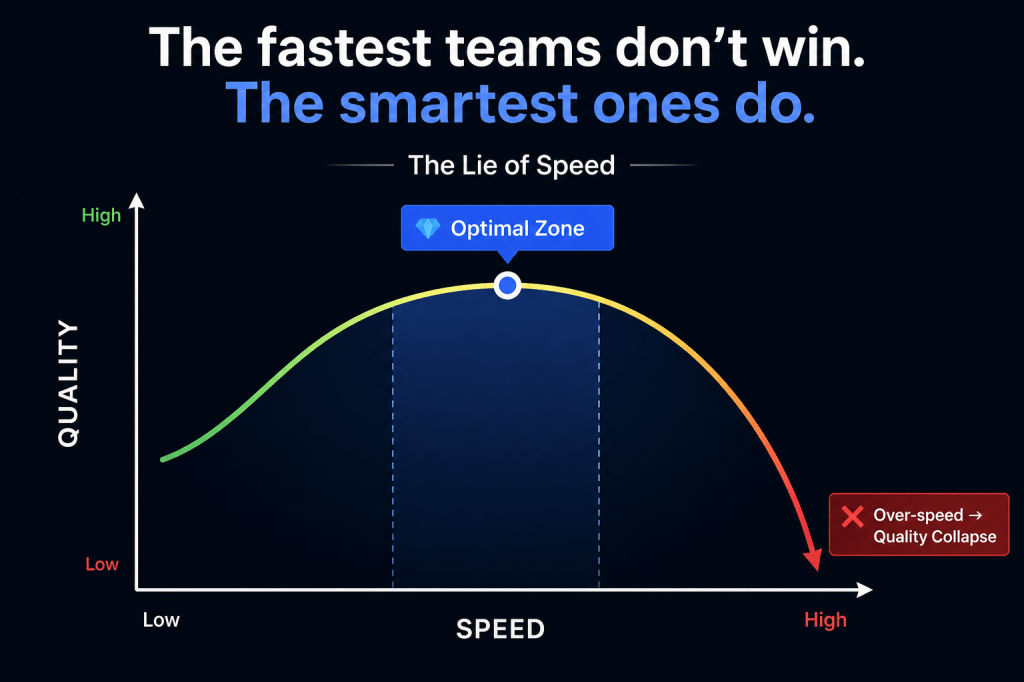
Speed and quality don’t move in a simple, straight-line relationship. As development speeds up, quality doesn’t just drop steadily—it can decline more sharply at certain points, making the trade-off more complex than it first appears.
B. Optimization Insight
Here’s the key insight: the best performance doesn’t come from going as fast as possible. It comes from finding the right balance—an equilibrium point where speed and quality are both optimized, rather than one overpowering the other.
C. Cost Impact
Pushing development too quickly often leads to more mistakes, which means more rework and a higher chance of costly recalls. In the end, what looks like a time-saving move upfront can turn into a financial burden later on.
VI. FIGURES
Fig. 1. The “Lie of Speed”: Value peaks within the optimal zone; beyond this point, acceleration. Figure 1 illustrates the non-linear relationship between development speed and system-level quality. At low to moderate speeds, performance improves due to learning effects, reduced waiting times, and increased coordination efficiency. This region represents the value-creation zone. However, beyond a critical threshold—referred to as the optimal zone—further acceleration leads to a disproportionate decline in quality. This degradation is driven by reduced validation depth, increased defect propagation, rework accumulation, and coordination breakdowns across subsystems. The right-hand side of the curve represents a regime of systemic instability, where speed ceases to generate value and instead amplifies risk. This non-linear behavior challenges linear assumptions embedded in traditional project acceleration strategies and highlights the necessity of controlled optimization rather than maximization. Leration drives non-linear quality degradation and compounds systemic risk.
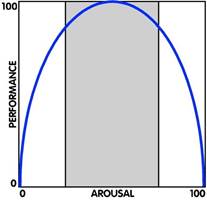
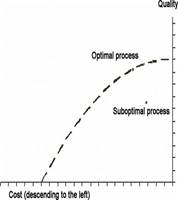
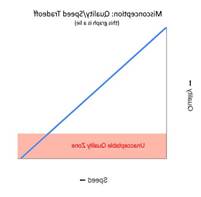
Fig. 2. Radar comparison of development models.
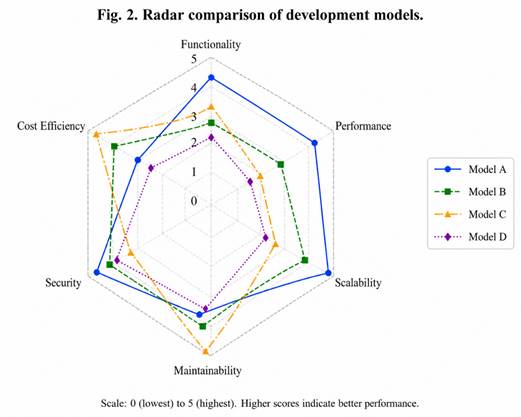
Fig. 3. Relationship between development time and defect rate (PP100).
VII. DISCUSSION
The results make one thing clear: there’s no single “best” development approach that wins in every situation. Lean methods bring structure and reliability, while agile approaches deliver speed and flexibility—but each one falls short when used on its own.
That’s where the Dual-Transition Model comes in. It blends the strengths of lean discipline, agile responsiveness, and the rigor of systems engineering into one cohesive approach. Instead of choosing between speed or stability, it aims to balance both.
The outcome? A hybrid model that allows teams to move faster without sacrificing quality in a significant way. It’s a more controlled form of acceleration—one that fits the demands of today’s fast-moving, software-driven automotive landscape.
VIII. CONCLUSION
The automotive industry is steadily moving toward hybrid development systems that blend continuous improvement with more adaptive,
Flexible engineering processes. It’s no longer about sticking to one rigid method—it’s about evolving as you build.
Looking ahead, success will come down to balance. Companies need to move fast, but not recklessly; maintain high quality, but not at the cost of agility; manage risks without slowing innovation; and keep costs under control while still pushing forward.
In short, the real competitive edge lies in juggling four key factors—
*speed,
*quality,
*risk,
*cost
and knowing how to adjust them as conditions change.
REFERENCES
[1] O. Dinç, Çift Geçişle Dönüşüm, 2026.
[2] T. Sakai, Automotive Industry Analysis, 2025
[3] J.D. Power, Initial Quality Study (IQS), 2025
[4] D. Rigby et al., “Embracing Agile,” Harvard Business Review, 2016.
[5] J. Ward, Lean Product Development, 2007.
[6] J. Liker, The Toyota Way, 2004.
[7] R. Cooper, “Agile-Stage Gate,” Research Technology Management, 2016.
[8] INCOSE, Systems Engineering Handbook, 2015.
[9] U. Eklund et al., “Agile vs Systems Engineering,” IEEE Software, 2019.
[10] McKinsey, “Software Defined Vehicle,” 2023.
[11] Deloitte, “Future of Automotive Software,” 2024.
[12] M. Schilling, Strategic Management of Innovation, 2017.
[13] S. Thomke, Experimentation Matters, 2020.


Bir Cevap Yazın